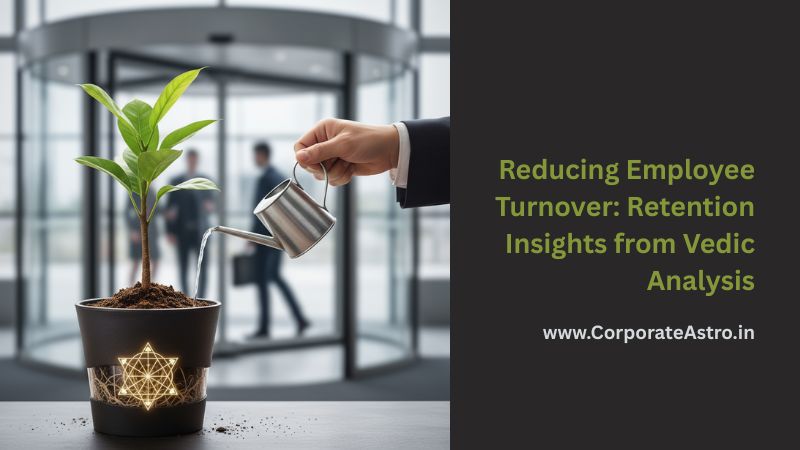
High employee turnover is one of the most disruptive and expensive challenges a modern business can face. It drains resources through constant recruitment, damages institutional knowledge, and erodes team morale. While companies invest heavily in retention strategies like competitive salaries and exit interviews, these methods are often reactive. They address the symptoms after the problem has occurred, rather than tackling the root cause.
What if you could shift from a reactive to a proactive retention strategy? What if you had the data to understand an employee's core needs and motivations from day one, allowing you to create an environment where they are naturally inclined to stay and thrive? This is the power of retention insights derived from Vedic Analysis.
Why Traditional Retention Efforts Fall Short
An exit interview tells you why a person has already decided to leave. An employee satisfaction survey gives you a snapshot in time, but it does not always reveal the deep, underlying drivers of discontent. These tools are valuable, but they are lagging indicators. They measure the past.
To truly reduce turnover, you need leading indicators. You need to understand the fundamental alignment between an employee's core nature and their role within the company. A persistent misalignment in this area is the number one predictor of future turnover, and it is a factor that traditional HR metrics simply cannot see.
"Retention is not about preventing people from leaving. It is about creating an environment so aligned with their core nature that the thought of leaving becomes unnatural."
Unlocking Proactive Insights with Vedic Analysis
Vedic Analysis provides a unique and objective look into an individual's psychological and motivational blueprint. By examining their birth chart, we can identify specific traits and needs that are critical for their long term job satisfaction. This allows managers and leaders to move beyond generic retention tactics and create personalized strategies.
- Aligning Role with Core Nature: Is your top salesperson, who thrives on interaction and risk, being considered for a promotion to a solitary, administrative role? Their chart might reveal this is a fundamental mismatch that will lead to burnout. Vedic analysis helps ensure career paths align with an employee's innate strengths.
- Understanding Motivational Drivers: One employee may be driven by the need for stability and security, while another requires constant challenge and growth to stay engaged. Knowing this allows you to tailor incentives and opportunities in a way that resonates deeply with each individual.
- Improving Managerial Compatibility: The old saying is true: people leave managers, not companies. Compatibility analysis can highlight potential friction points between an employee and their direct supervisor, providing a roadmap for improving communication and building a stronger, more supportive relationship.
By integrating these insights, you are not just trying to convince people to stay. You are actively building a workplace where they are deeply understood and supported. This proactive approach does more than just lower turnover; it builds a resilient, motivated, and highly engaged workforce that becomes your greatest competitive advantage.
Frequently Asked Questions
It does not predict a future event like quitting. Instead, it identifies the root causes of job dissatisfaction. By comparing an employee's core nature from their chart to their current role and manager, we can spot fundamental misalignments that, if left unaddressed, are a leading cause of turnover.
Absolutely. This is a primary application. By understanding the core drivers of each team member, we can help managers tailor career paths, improve communication, and adjust roles to better align with their natural strengths. This proactively increases engagement and loyalty.
Yes. All analysis is conducted with the utmost confidentiality. The insights are never used to make negative decisions against an employee. Instead, they are provided to leadership as a tool for positive development, better management, and creating a more supportive and effective work environment for everyone.